The seasons at a glance
Season | Months | What it's like | Best for |
|---|---|---|---|
Spring | March–May | Warm afternoons, cool nights; haze builds by May | Rhododendron, Paro Tshechu |
Summer | June–August | Warm and wet; cloud sits on the ridges | Quiet valleys, empty dzongs |
Autumn | Late Sept–Nov | Bright, dry, cold nights | Trekking, clear mountains, Thimphu Tshechu |
Winter | Dec–February | Sunny days, hard frosts; high passes closed | Cranes in Phobjikha, clean light |
Valley conditions. It is about 6°C colder for every 1,000 metres you climb, and 10–15°C colder at dawn than in the afternoon, in any season.
There is no single best month for Bhutan. Spring brings rhododendron and the biggest festival; autumn brings the clearest views and the only reliable trekking; winter is cold, quiet and the one season for the cranes; summer is green, wet and nearly empty. The useful question is what you are coming to see, and the calendar follows from that.
Spring: colour, and the crowd that comes with it
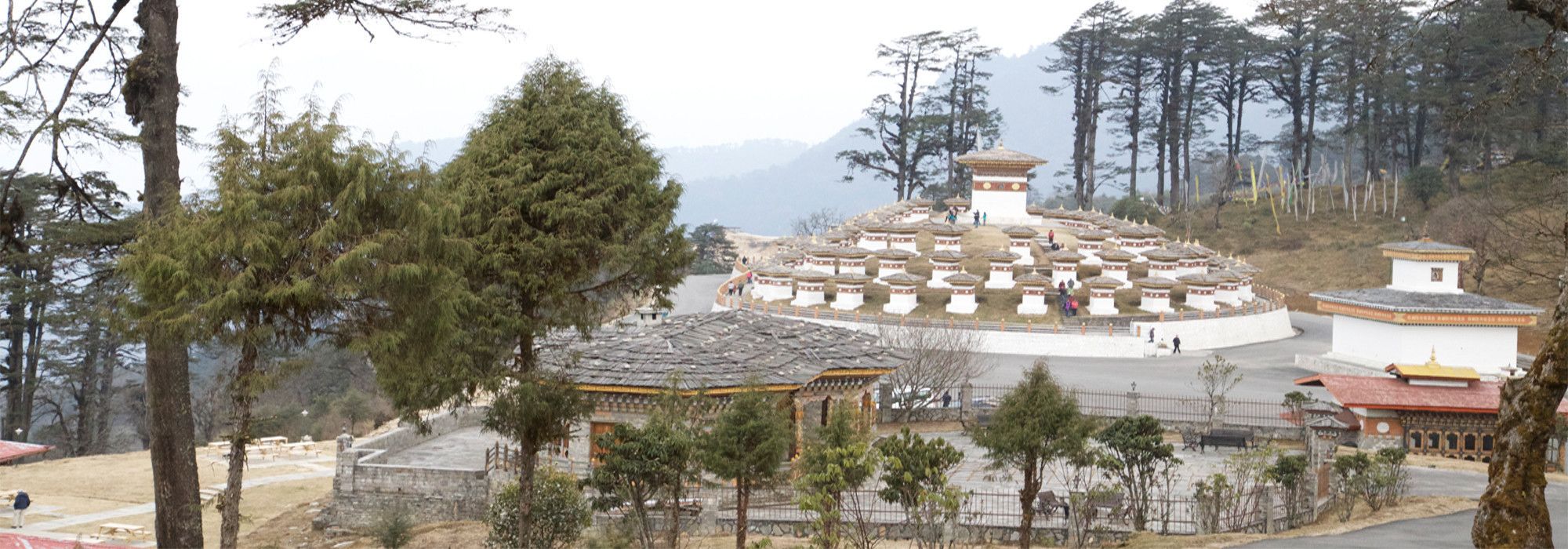
From March the valleys warm quickly. Rhododendron flowers along the passes (Dochula and Chele La are the two most people cross) and the forest floor changes week by week. Afternoons are fine in a shirt; dawn still wants a jacket.
Spring is also Paro Tshechu, and that has practical consequences. Paro has one airport and a limited number of rooms, and festival week doesn't fill up gradually. It closes. Flights, hotels and guides all run out together, months ahead of the dates.
The cost is haze. By late April the air thickens and the high peaks slip behind it. If you have come to see Chomolhari standing over the valley, spring is the wrong season, and no amount of luck changes that.
Festival dates follow the lunar calendar and are set by the Central Monastic Body, and published dates for 2027 still disagree by a month. Before planning around any tshechu, check the official announcement, and treat anything more than a year out as provisional.
Autumn: the clear window, and the busiest
Late September to November is the season behind most photographs of Bhutan. The monsoon withdraws, the air dries, and the high peaks stay in view for weeks at a time. Nights turn properly cold, days stay bright, and the trails firm up.
For walking high, it is the season by a wide margin. The passes on the Chomolhari routes can be relied on, the camps are comfortable, and a clear morning at Jangothang is as likely as it gets.
Everyone else knows this too. Thimphu Tshechu falls in autumn, the trekking crews are all out, and the good rooms in Paro and Punakha go early. Nobody can make autumn quiet.
Winter: cold, still, and the only time for cranes
Winter in the western valleys is gentler than people expect. The days are often sunny and still; it is the nights that are hard, well below freezing at Phobjikha's height. The light in December and January is the cleanest of the year, with none of spring's haze.
What only winter has is the black-necked cranes. They fly in from the Tibetan plateau from late October and stay on the Phobjikha valley floor until about mid-February, in a habitat the Royal Society for Protection of Nature has looked after for decades. The Black-Necked Crane Festival on 11 November falls safely inside that window.
We can't promise a sighting. They are wild birds on a wide valley, and some mornings they are somewhere else. Outside late October to mid-February, though, there is nothing to see at all: the birds have left the country.

Black-necked cranes, Phobjikha. The valley is empty of them from spring to autumn.
Height is what winter closes. The high passes on the Chomolhari routes aren't a winter proposition and we don't run them then. Winter is for low walks, the valleys and the cranes.
Summer: green, wet and quiet
June to August is the season nobody advertises, and it deserves a fairer hearing. The valleys are at their greenest, the rivers are loud, rooms are easy to find and the dzongs are close to empty. Rain mostly falls in the afternoon and overnight rather than all day.
It is a trade, though. Cloud can sit on the ridges for days, so the mountains may not appear at all. Landslides can close the roads over the passes, and a closure on the Dochula road reorders a whole itinerary rather than delaying it by an hour. Trekking is miserable: mud, leeches below the treeline, and views that never arrive.
So we don't steer people away from summer. We steer them away from summer treks.
Choose the season before the route. The route follows from it.
Which month, for what
To walk high: late September to mid-November, with October at the centre. Nothing else comes close.
For a festival: spring for Paro, autumn for Thimphu, late winter for Punakha. Book the flights before anything else.
For the cranes: late October to mid-February, most reliably November and December. This doesn't combine with a high trek.
To see the mountains: late autumn and early winter. Spring haze and summer cloud will both hide them.
For quiet: June to August, or January and February, accepting what each one costs.
One week with no strong priority: mid-October or late March, both of which give you a workable version of most things.
If you asked us for one month, we would say late October. The monsoon is over, the air has cleared, the deep cold hasn't arrived, the cranes are landing in Phobjikha and the passes are open. It is the one point in the year when the valleys, the high trails and the wildlife are all available at once. Ignore that if you want a festival, if you want the country to yourself, or if anyone in your party hates cold nights. It is bright by day and hard by dawn.
The month we steer people away from is July on the Chomolhari routes. It can be walked. We would just be selling you eight days walking towards a mountain you won't see.
When the weather doesn't cooperate
Bhutan's weather rarely cancels a day; it reorders it. If Dochula is closed, Punakha moves later and Thimphu earlier. A high walk becomes a valley walk from the same place, so you lose the altitude, not the day. The ambitious extras at the end of a day go first, and are the least missed.
What never moves is an acclimatisation night, or the rest day before a big walk. Those exist so bad weather has somewhere to go. Squeezing them to catch up is how a scheduling problem becomes a health problem.
Season is also why our five journeys aren't interchangeable. The two Chomolhari routes are built for autumn. The Heart of Druk reaches Phobjikha and Bumthang, so it has something particular to offer in winter. The Sacred Valleys works in almost any month, which is why we suggest it when dates can't move. If your dates and your plans don't match, we would rather change the route than the expectations.
Sources
Bhutan Tourism FAQs for the seasons; official festival announcements for tshechu dates; the Royal Society for Protection of Nature for the cranes. Trekking conditions and how we handle bad weather come from our own guiding.